API Integrations: Connecting Business Systems Without Data Silos
When systems cannot communicate, teams pay for manual transfer, duplication, and errors every day.
Direct answer
Reliable integrations define the source of truth, data states, and failure handling, then use APIs and webhooks with authentication, logging, and safe retries.
- Define the source of truth for each field.
- Distinguish API requests from webhook events.
- Prevent duplicate processing during retries.
- Monitor errors, states, and latency.
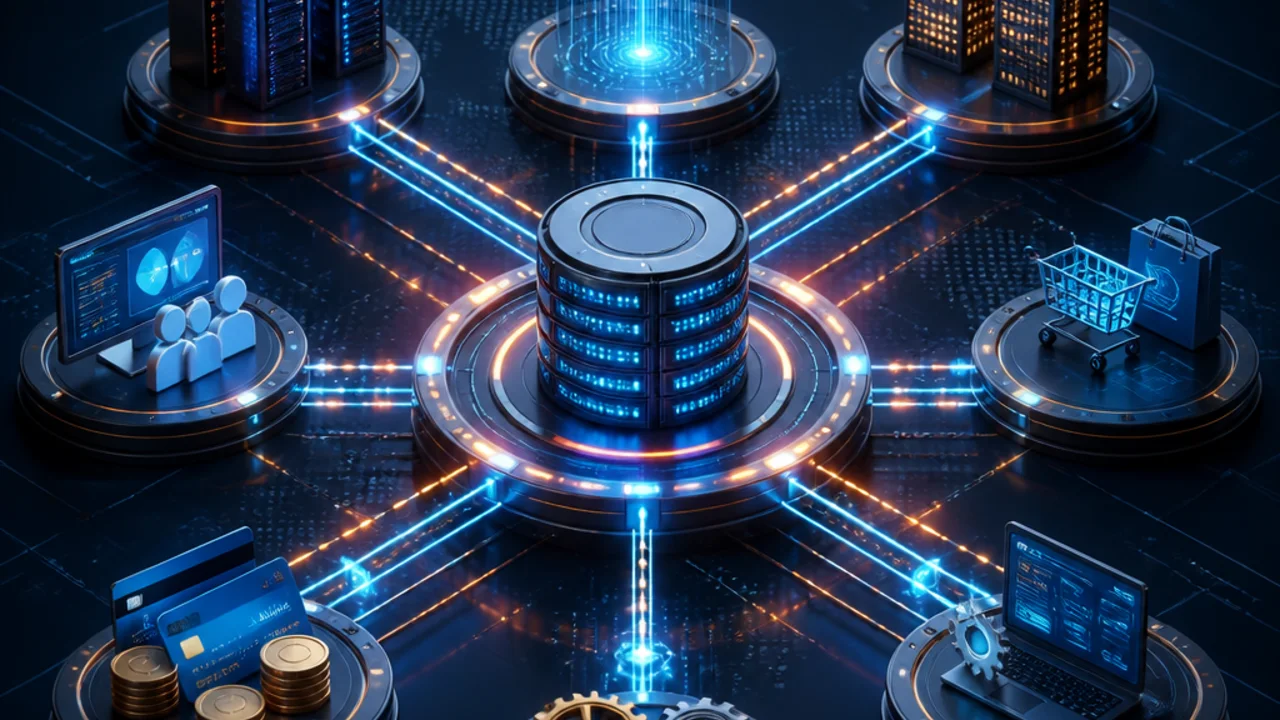
A company may use sales software, a payment gateway, support tools, and an internal system, but value drops when employees must move data between them manually. Good integrations turn separate tools into a clearer operating system.
What must two systems agree on?
Before writing an integration, define the source of truth for each field, the data shape, sync timing, and what happens when a request fails. These decisions matter more than simply sending an HTTP request between services.
API or webhook?
An API is used when one system requests information or performs an action. A webhook sends an event when something happens. Reliable architectures often need both, with authentication, logs, and safe retries.
Rules for reliable integrations
- Use authentication and least-privilege access.
- Prevent duplicate processing when events are retried.
- Log requests, errors, and processing states.
- Monitor latency, queues, and retry behavior.
When is a separate integration layer useful?
As systems multiply or APIs change, a dedicated integration layer protects platforms from fragile dependencies and makes transformations and monitoring easier to maintain.
How FIRST CODE builds integrations
We document the data lifecycle, define states, build connectors, and add monitoring and failure handling before production. The result is a flow that can be trusted beyond the ideal case.
Frequently asked questions
What is the difference between an API and a webhook?
An API is used when a system requests data or performs an action. A webhook sends an event when something happens. Reliable systems often need both.
How can integrations avoid duplicate actions?
Use unique event identifiers, idempotent processing, and a processing-state record before running an operation again.
When is a separate integration layer useful?
When systems multiply, APIs change, or transformations and centralized monitoring are needed instead of fragile point-to-point links.